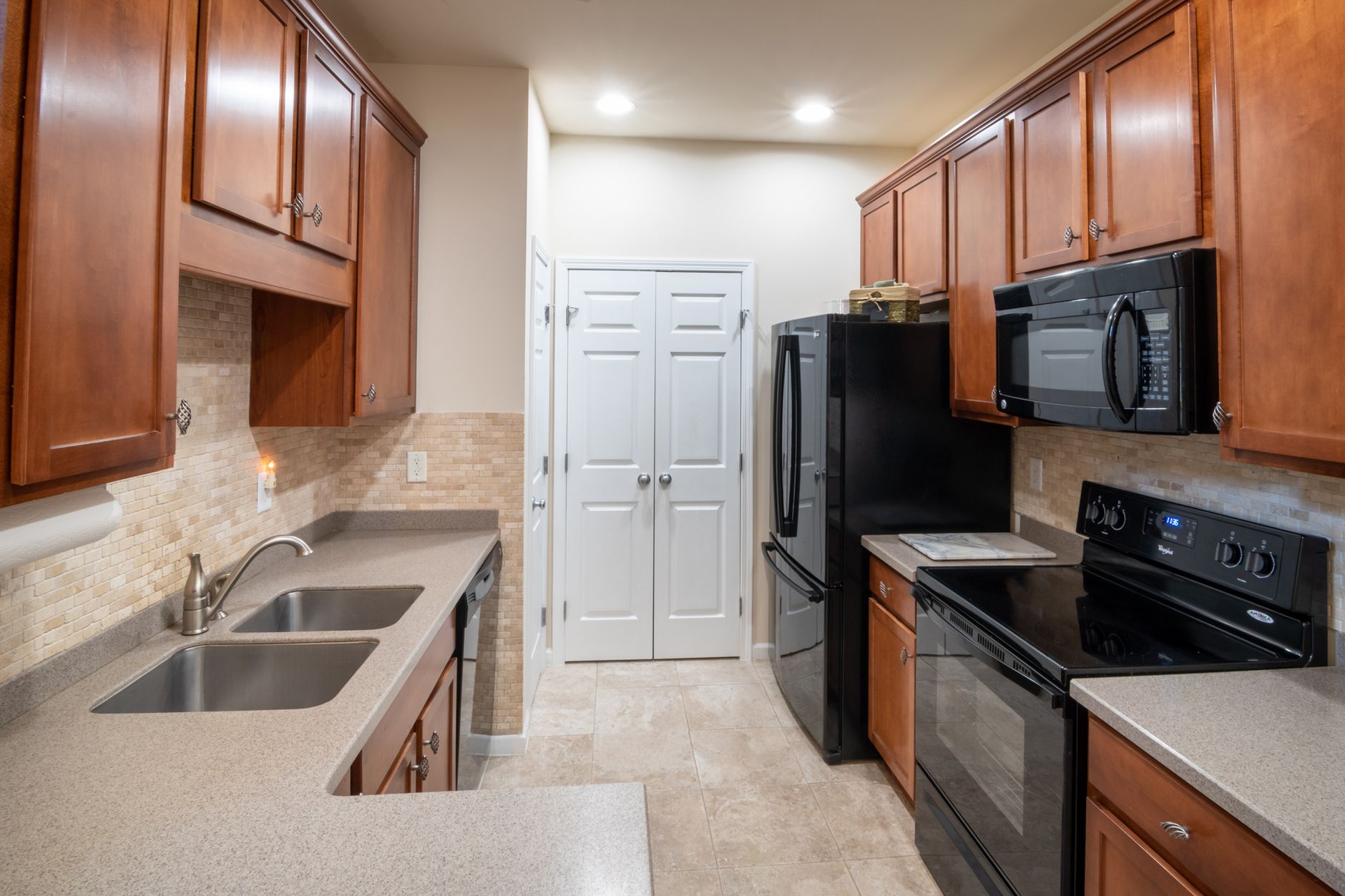
Kitchen Countertops in Temecula, CA
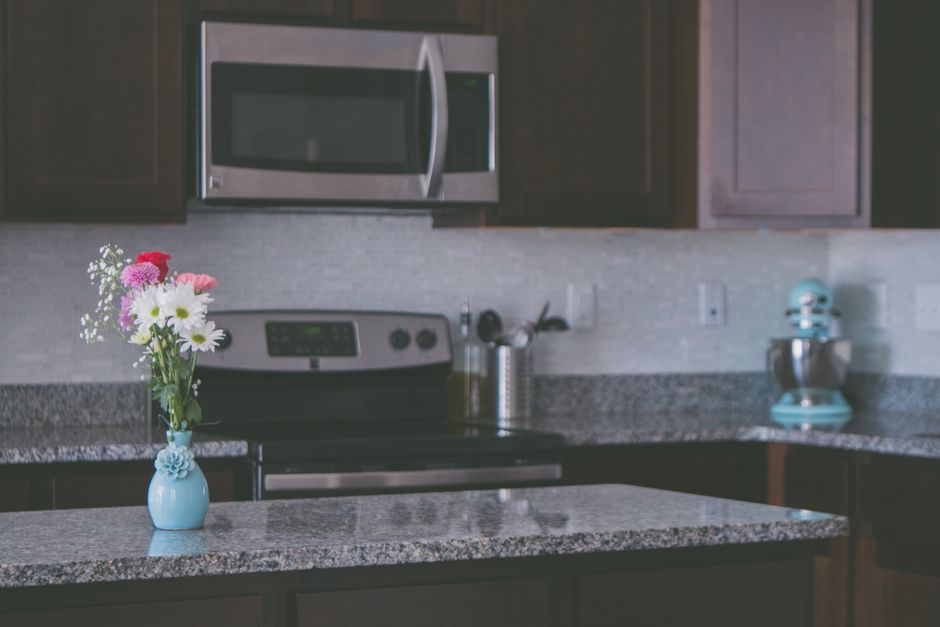
Notes on kitchen countertops in Temecula, CA: islands, peninsulas, seating overhangs, prep zones and the material that suits each part of a family kitchen.
What We Cover
- Backsplash Height and Countertop Edge Transitions How backsplash height, outlet placement and the edge profile where a countertop meets a window or wall affect a Temecula kitchen.
- Butcher Block Prep Zone Beside Quartz Countertops Setting a wood prep section into a quartz run: seams, height match, sealing and how the two materials behave together.
- How Deep Should an Island Overhang Be for Family Seating in Temecula Overhang depth, support and stool spacing for an island where Temecula kids do homework and guests gather during wine country weekends.
- Matching Countertop Materials to Each Kitchen Zone Why the zone beside the cooktop, the sink run and the serving end of the island may each want a different surface.
- Peninsula or Island in a Temecula Tract Kitchen How kitchen footprint, walkway clearance and the original builder layout decide between a peninsula and a freestanding island.
- Templating and Install Day in Temecula Summer Heat What happens between cabinet measurement and the final seam, and how Temecula summer heat changes adhesive, handling and scheduling.
Kitchen Countertops in Temecula, CA
Kitchen countertops in Temecula, CA are mostly judged by the island. A family kitchen here carries homework, breakfast, a cold drink station and the serving line after a weekend in the Temecula Valley wine country, and the surface has to do each of those jobs without a fuss. The crew starts every job by looking at the layout, because the layout decides what the counter has to do.
Islands, Peninsulas and Walkways
Many homes in the Inland Empire were built with a peninsula, and plenty of owners want an island instead. The deciding number is walkway width, measured from countertop edge to countertop edge, not from cabinet to cabinet. A seating overhang takes inches from that walkway, so the stool depth gets settled before the slab is cut.
One Material Per Zone
The sink run, the cooktop side, the prep zone and the serving end of an island all age differently. Mineral-heavy water near Murrieta Creek and the Santa Margarita River leaves rings at the sink. Heat marks the area beside the range. A butcher block section gives a knife somewhere forgiving to land, while quartz, laminate or solid surface handle the wet and the serving work. Mixing two surfaces works when the change lands at a natural break and over a cabinet frame.
Templating and Install in Riverside County
Templating happens after the cabinets are set and level. Riverside County summer heat shortens adhesive working time, so install crews start early and plan the carry path before the slab leaves the truck. Seam placement, sink cutouts and backsplash height are settled on the template, because moving a seam after the cut costs a day of work.
Guides
The pages here cover island overhang depth, the peninsula and island choice, butcher block beside quartz, materials by kitchen zone, templating and install day in the summer heat, and backsplash and edge transitions. Each one answers a single question a Temecula homeowner asks before the first measurement.
Latest Guides
Everyday Countertop Care Questions for Temecula Kitchens
2026-10-06
Most countertop trouble starts after the installers leave, in the first few months of daily use. The questions below come up again and again in kitchens around Temecula, and the answers are mostly about habits rather than products. They are grouped by the thing that actually goes wrong: water, heat, stains, seams and the sealing schedule.
What is the white crust that builds up around the faucet?
It is mineral residue left behind when water dries. Water in much of inland Southern California carries a lot of dissolved minerals, and the Santa Margarita River and Murrieta Creek watersheds are part of that story. Each drop that dries on the surface leaves a thin ring, and a ring that is never wiped becomes a crust that is harder to remove than the original drop.
The fix is a weekly wipe at the faucet base and around the sink cutout, with a soft cloth and a mild cleaner. Letting a damp cloth rest on the crust for a few minutes loosens it without scrubbing. Scrubbing with an abrasive pad is the common mistake, because it dulls polished quartz and granite in a patch that never matches the rest of the surface. A squeegee habit after dishes keeps the crust from ever forming.
Does every countertop need to be sealed?
No. Natural stone with open pores, such as granite, marble and soapstone, takes a sealer, while quartz and solid surface do not. Quartz is made with resin that fills the pores during manufacturing, so there is nothing for a sealer to enter. Porcelain slabs are the same story, since the body of the material is dense from the factory.
For a stone that does need sealing, the water drop test is the honest guide. Put a few drops of water on the surface and wait about ten minutes. If the stone darkens under the drops, it is absorbing and wants a coat. If the drops bead and stay light, the sealer is still working. The test should be done in a few spots, particularly beside the sink and the cooktop, where wear is heaviest. A dark kitchen with heavy use may need a coat more often than a lightly used guest kitchen.
How do heat marks happen, and can they be avoided?
A hot pot set straight from the burner onto the surface can scorch quartz resin, leave a pale ring on laminate and blister solid surface. Granite and quartzite tolerate more heat, but a sudden shift in temperature can stress a seam or an edge near a cutout. The marks are not caused by the heat alone but by the speed of the change.
The simple answer is a trivet within arm's reach of the cooktop, on both sides. People set a pan down where their hand lands, so the trivet has to be where the hand lands. In a kitchen that sees Riverside County summer heat, there is another habit to watch: a surface that has been in direct afternoon sun through a window can be warm enough to speed up a mark when a hot dish lands on it.
What about stains from wine, coffee and oil?
Wine and coffee are the two most common spills in a family kitchen, and each behaves differently on each material. Quartz resists both when wiped within a reasonable time. Sealed granite does well, while unsealed granite can show a faint ring from an overnight spill. Marble is the sensitive one, because acid in wine and in citrus can etch the finish, leaving a dull spot that a wipe does not remove.
Oil is slower. A splash near the cooktop that sits for days can darken a porous stone, and a degreasing cleaner or a poultice made for stone will lift it if the stone has not set the stain too deeply. Butcher block is the opposite case: oil is part of its care, and a mineral oil coat on a schedule keeps the wood from drying and cracking in dry air.
How should a butcher block section be looked after?
Wood in a dry climate moves. A butcher block prep zone set into a run of stone needs a coat of food safe oil when the surface starts to look dull or pale, and a quick check for any gap that has opened at the joint with the stone. The edges and the underside should have been sealed at install, and a section that touches water near a sink needs the most attention.
Cutting directly on the wood is what it is made for, but a deep knife groove can collect moisture. Light sanding with fine paper and a fresh coat of oil restores the surface. Hot pans on wood leave a brown mark, so the trivet rule applies here too. Humid days after a winter storm can swell the board slightly, and the joint with the stone is designed to absorb that.
What should be done about a seam that looks different over time?
A seam can change in two ways. Its color can look more obvious as the surface ages, or a hairline gap can open along it. Both are usually cosmetic, and the right response is to look before touching. Run a fingernail across the seam. If it catches, the two edges have shifted in height and a fabricator should look at it, since that can mean a cabinet has moved or the support below is uneven.
If it feels flat and only the color is visible, the seam is doing its job. A seam placed over a cabinet support rarely moves, while one that sits over an unsupported span, a sink cutout or a dishwasher gap is where trouble starts. That is the reason seam placement is worked out on the template and not on the day of install.
Which cleaners should be avoided?
Bleach, ammonia, strong vinegar solutions and abrasive powders are the usual culprits. Acidic cleaners etch marble and can dull the sealer on granite. Abrasive powders scratch polished surfaces, and bleach can discolor certain solid surfaces over time. A pH neutral stone cleaner or a few drops of dish soap in warm water covers nearly every material in the kitchen.
Glass cleaner is a quiet offender. Many formulas contain ammonia, and a habit of using it on a countertop can cloud a sealed finish over the years. A microfiber cloth with plain warm water handles most daily messes, and a second dry cloth removes the streaks that hard water would otherwise leave.
How does the area around the sink need to be treated differently?
The sink run takes the most water, the most dishes and the most impact. An undermount sink leaves an edge that is exposed to splashing, and a slow drip from a faucet can mark the same spot every day. The sink cutout is also the weakest part of the slab, since the stone is narrowest there. Heavy cast iron pots should not be dropped into the sink, and a pot should not be leaned on the edge of the cutout.
Laminate needs the most care near the sink. Water that gets under the edge or into a seam swells the core, and the swelling does not reverse. Keeping the seam sealed with a bead of flexible caulk, and wiping standing water promptly, protects the surface. Solid surface and quartz are more forgiving, though a cloth that sits wet in the corner of the sink for days can still leave a stain.
What does a yearly check look like?
Once a year, walk the countertop with a flashlight held low. Look along the surface for dull patches, scratches in the finish, and hairline gaps at the backsplash and at the sink. Check the caulk where the counter meets the wall, since flexible caulk can shrink and crack over time. Run a hand along each seam and each edge profile, feeling for chips on the bullnose or eased edge, because a small chip is simple to fix and a large one is not.
Test the water drop on any natural stone, oil the butcher block, and look at any outlets near the splash line for signs of moisture. That ten minute walk-through catches nearly every problem while it is small, and it keeps the surface looking the way it did on the day it was installed.
Countertops last when water, heat and abrasion are managed by small habits instead of big repairs.
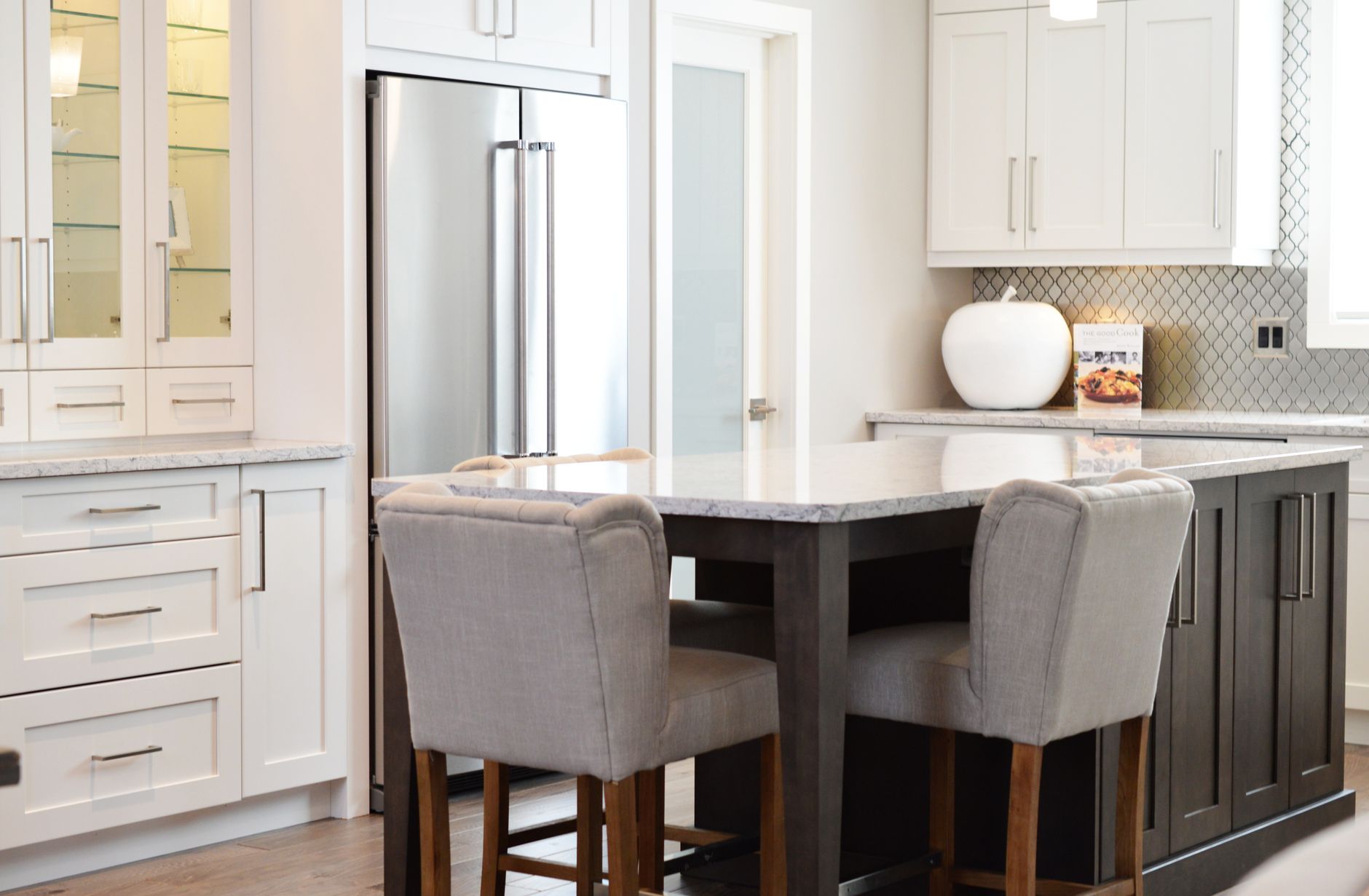
How Should a Temecula Kitchen Be Laid Out for Entertaining
2026-10-06
Anyone who has hosted in Temecula knows how a gathering ends up: everybody crowds into the kitchen no matter how nice the patio is. After a Saturday in the Temecula Valley wine country, a family arrives home with friends, bottles and a plan to grill, and the kitchen becomes the party. A counter layout that works for a quiet Tuesday dinner can fall apart under that kind of traffic. This article walks through how the surfaces in a kitchen can be arranged so cooking and entertaining share the room without colliding.
Where do guests actually stand in a kitchen?
Guests gravitate to three spots: the end of the island, the gap beside the refrigerator, and the doorway to the patio. They avoid the sink and the cooktop, because those are obviously the cook's territory. A layout that fights those habits tends to fail, and a layout that gives guests a place to land in each of the three spots tends to work without anyone being told where to stand.
The end of the island is the strongest magnet, which is why it deserves attention. A rounded or eased corner is easier on hips and forearms than a sharp square one, and a bullnose edge on that corner can take the repeated bumps of a crowded evening. If the island carries an overhang for stools, the end seat gets used first and longest. That seat needs knee room and a footrest, and it should not sit directly in front of the cooktop.
What zones does a party kitchen need?
Four jobs happen at once during a gathering: food comes out, drinks get poured, ingredients are prepped, and dishes pile up. When all four share one stretch of countertop, the cook and the guests keep reaching across each other. Splitting them across separate surfaces solves most of the congestion. The table below shows one way to divide them, with the surface characteristics each zone tends to need.
Zone Best location What the surface faces Surfaces that suit it Serving Island end or peninsula Platters, wet glasses, spills Quartz, solid surface, laminate Drinks Near the patio door Ice, condensation, wine drips Quartz, sealed granite, porcelain Prep Between sink and cooktop Knives, juices, hot pans Butcher block insert, quartz, quartzite Cleanup Sink run Standing water, mineral spots Quartz, granite, solid surface A homeowner does not need a separate piece of stone for each job. The point is that each job has a place that is not in the way of the others, and that the surface in that place is suited to what lands on it.
How wide should a serving surface be?
Platters are wider than people expect. A standard sheet pan, a cheese board and a salad bowl need about three feet of clear countertop side by side, and a buffet line needs more than that, because people need room to hold a plate in one hand and serve with the other. An island end that only offers a foot and a half of clear surface turns into a pile within the first twenty minutes.
The depth matters as much as the width. Counters that run deeper than the standard cabinet depth let a tray sit back from the edge, away from elbows. Some Temecula kitchens gain that depth by adding a thicker backsplash ledge or by pushing the island overhang out on the seating side only, leaving the serving side at the normal depth so the walkway stays clear.
Which materials hold up to wine, ice and platters?
Red wine is the test every kitchen in the valley eventually faces. Quartz resists staining because the resin fills the pores that a natural stone would otherwise leave open. Granite handles wine well when it has been sealed on schedule, and an unsealed granite can show a ring after an overnight spill. Marble is the cautious case: wine and anything acidic can etch the finish, and a party night is exactly when no one is watching the counter.
Ice and condensation add a slower problem. A ring of water left under a cold bottle sits on the surface for hours at a party, and on laminate that moisture can creep into a seam. Solid surface forgives it better, because the material is the same all the way through and the seams are nearly invisible. Porcelain slabs shrug off both wine and water, though their edges are more brittle if a heavy tray gets dropped on a corner.
Heat is a different matter at the cooktop side. A hot pan carried over to the serving end and set down on the nearest surface is a common accident. Quartz can scorch from a pan straight off the burner, so a pair of trivets near the serving end is cheap insurance. Granite and quartzite tolerate more heat, but a sudden change in temperature can still stress a seam.
How can the cook and the guests stay out of each other's way?
The simplest tool is a clear path. A walkway of about three feet around an island lets two people pass, and four feet lets a cook turn with a hot pot while someone walks behind. That is why an overhang with stools on the side that faces the room works better than stools on the side facing the cooktop. Guests sit with their backs to the walkway, and the cook has an open line between the sink, the range and the refrigerator.
A secondary surface helps more than most people expect. A peninsula or a small side counter near the patio door gives the drinks zone its own address, so the person refilling a glass does not have to cross the cook's path. In older tract kitchens built across the Inland Empire, that side counter is often a spot where a short run of laminate or butcher block already exists, and it can be upgraded without touching the main work area.
What changes when the party spills outdoors?
In Riverside County, an evening gathering often drifts onto the patio by sunset, and the kitchen becomes the supply depot. That makes the doorway counter more important than the island. A pass-through window with a ledge, or a counter that runs close to a slider, lets food and drinks move out without a trip around the island. Outdoor heat shortens how long platters can sit, so the surface nearest the door gets a lot of quick hand-offs rather than long stays.
Homes near Murrieta Creek and Temecula Creek, where kitchens often open onto a back yard, tend to benefit most from that kind of ledge. It also keeps traffic away from the cooking area, since people do not need to enter the kitchen to get a refill.
What if the kitchen is closed in or too small for all of this?
Many kitchens from the housing boom decades have a footprint that looks generous until a freestanding island goes in. In that case, a peninsula with a deeper serving end can do the work of an island without eating the walkway. A removable cart with a butcher block top can add a prep surface for an evening and roll out of the way afterward. The countertop is still the anchor, but the rest of the kitchen can flex.
When walls can come down, an opening between the kitchen and the family room changes the whole arrangement. A long continuous surface through the opening becomes a bar, and guests stay on the family room side while the cook stays in the kitchen. A seam in that surface should land over a cabinet support and away from the seating, because the long run will see the most weight and the most elbows.
How should a layout be tested before the order is placed?
Tape and cardboard answer more questions than a drawing. Mark the island footprint and the stool positions on the floor with painter tape, set a cardboard sheet at the size of a platter on the serving end, and walk through a mock gathering with a few family members. The tape will show where people stand and where the walkway pinches. It costs an afternoon and often changes the stool count or the overhang depth.
That test pairs well with the digital template, which records the real walls and cabinets after they are installed. The template fixes the measurements, and the tape test fixes the habits. Together they give the fabricator what is needed to place seams, cutouts and edge profiles in the right spots.
A party kitchen works when every job has its own surface and every surface suits its job.